
How to Look Up Shelby County Jail Population Data
County jail population numbers do not sit in one live dashboard. The most useful current figures come from the Shelby County Sheriff's Office jail information page, which reports the average daily census and yearly bookings. For broader trends, federal and nonprofit research groups publish jail data by state and county. The Bureau of Justice Statistics is the main national source for jail counts, and it posts annual reports.
So a full picture takes two steps. Start with the Sheriff's jail page for the current county census, then use national sources for trend and rate context. The Bureau of Justice Statistics publishes the annual Jail Inmates series that frames county numbers against state and national totals.
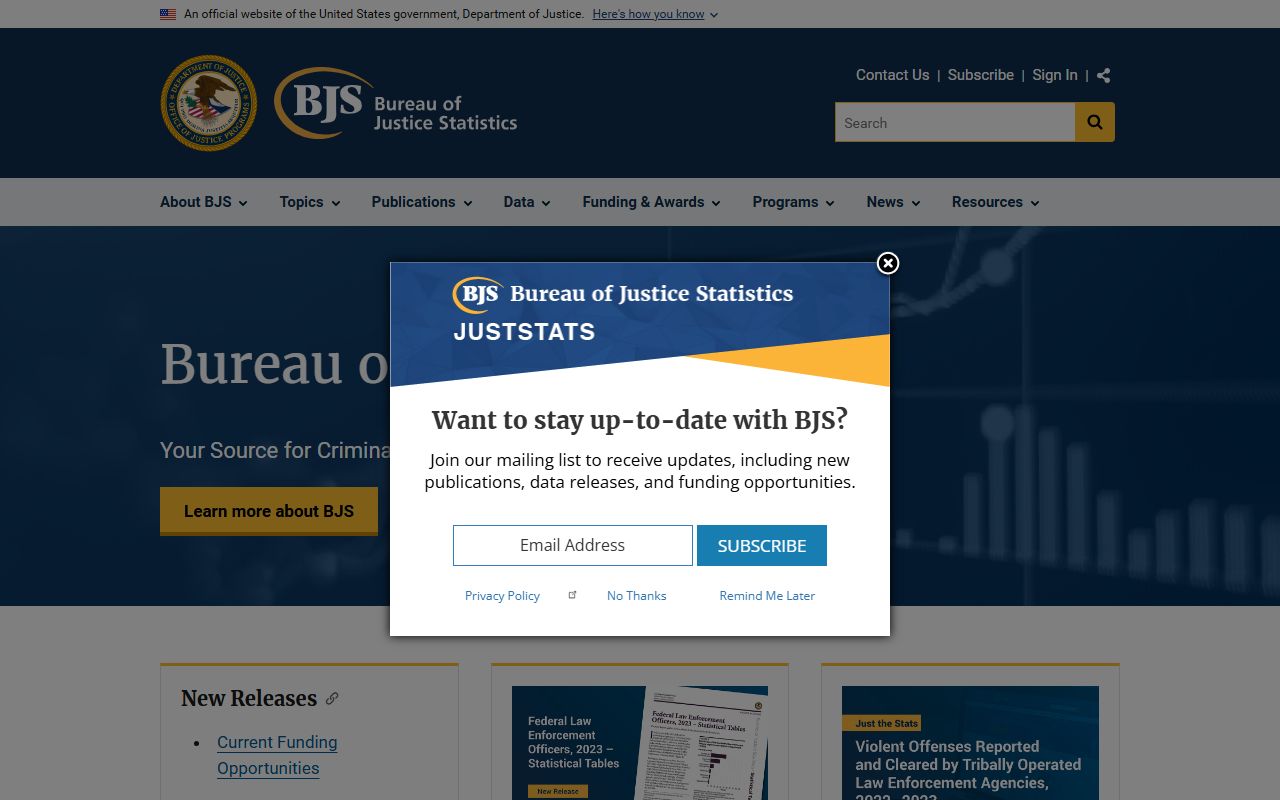
The Bureau of Justice Statistics site is where the national jail reports live, which helps explain how a county the size of Shelby compares to the rest of the country.
Shelby County Jail Capacity Overview
The county jail system runs across separate facilities for men, women, and youth. Male inmates are housed downtown at 201 Poplar Avenue. The women's facility, known as Jail East, sits at 6201 Haley Road in east Memphis. The Youth Justice and Education Center is at 3420 Old Getwell Road and is operated by Shelby County Corrections, not the Sheriff's adult jail division. The table lists the facilities and the official data found for each.
| Facility | Address | Population / Capacity Data |
|---|---|---|
| Jail (male facility) | 201 Poplar Avenue, Memphis, TN 38103 | Part of the ~2,600 average daily census; 636 total cell doors referenced in the door project |
| Women's facility (Jail East) | 6201 Haley Road, Memphis, TN 38103 | Part of the ~2,600 average daily census; MAT program in place |
| Youth Justice and Education Center | 3420 Old Getwell Road, Memphis, TN | Capacity not published in the inspected official sources |
The two adult facilities carry most of the count. The Sheriff's page does not publish a single bed-capacity number for each building, so treat the census figure as the best official measure of size.
Average Daily Population
The Sheriff's Office reports an average daily census of about 2,600 inmates across the two adult facilities. This is the single most useful official county figure. It reflects the typical number of people held on any given day, not the total who pass through in a year. The count moves with arrests, court dispositions, bond, and transfers.
The same page reports yearly bookings that average about 56,000. Bookings count every intake, so the same person can be booked more than once in a year. The gap between 2,600 held at a time and 56,000 booked a year shows how much short-term turnover the jail handles.
Demographic Breakdown
A detailed demographic table for the Shelby County jail is not published in the official sources reviewed. The Sheriff's page focuses on census, bookings, programs, and facility work rather than a public race, age, or sex breakdown. For that reason, this page does not list county demographic percentages, since inventing them would be wrong.
Readers who need demographic context can turn to national research groups that model jail data by jurisdiction. The Prison Policy Initiative publishes Tennessee and national breakdowns that show how jail populations tend to divide by race, charge level, and custody status.

The Prison Policy Initiative material is national and state context, not a Shelby County count, so use it to understand patterns rather than exact local figures.
Pretrial vs Sentenced Population
Most county jails hold a mix of people awaiting trial and people serving short sentences. Shelby County's 2025 population work points to both groups. The jail reported that 384 pretrial inmates were temporarily housed at regional facilities and 349 sentenced "pen-ready" inmates were transferred to state custody. The county said these moves eased crowding and aligned housing with custody status.
The exact day-to-day split between pretrial and sentenced inmates is not published as a public table. What the official record does show is that the county actively manages both groups, sending sentenced state-bound inmates to the Tennessee Department of Correction and using regional space for pretrial overflow.
Mental Health and Medical Population
The jail provides medical and mental-health care as part of daily operations. Mental Health staff are available for crisis care 365 days a year. A Medication-Assisted Treatment, or MAT, program is in place at Jail East and is planned for 201 Poplar. The county also runs a PREA reporting line at 901-222-4781 for sexual misconduct, harassment, or assault concerns.
These services point to a population with real medical and behavioral-health needs. The official page does not give a count of inmates in mental-health or medical housing, so this page describes the programs rather than a number.
Bookings Per Year and Turnover
Bookings tell a different story than the daily count. The Sheriff's Office reports yearly bookings that average about 56,000. Each booking is one intake event, so a single person arrested twice in a year shows up as two bookings. That high turnover is normal for a large urban county jail, where many people are held only a short time before bond, release, or transfer.
This churn shapes how the jail works. Staff hold weekly and monthly meetings with unit managers to track bookings, processing times, and program involvement. The Chief Jailer and staff oversee daily operations and watch the moving count. The takeaway is simple. The jail is not a fixed group of 2,600 people. It is a busy intake system that books tens of thousands of people a year while holding about 2,600 on any given day.
Accreditation and Certification
Oversight bodies review the jail on a set schedule. The Shelby County Jail is accredited by the American Corrections Association, a national standard for jail operations. The Tennessee Corrections Institute re-certified the jail on December 3, 2025. These reviews look at safety, staffing, conditions, and operations, and they matter because they tie the population numbers to real standards of care.
Accreditation does not erase crowding pressure. A 2025 needs assessment still flagged aging facilities, overcrowding, and a complex population. The county frames its door project, transfers, and programs as steps to meet those standards while planning for the long term.
National and State Context
County numbers mean more next to state and national figures. The Bureau of Justice Statistics tracks jail population per 100,000 residents for the nation and the states, and the Prison Policy Initiative breaks the same data down further. These rates are not Shelby County figures, but they show where a large urban county tends to sit. The comparison below names each source and what it measures.
| Source | Level | What It Measures |
|---|---|---|
| Shelby County Sheriff's Office | County | Average daily census (~2,600) and yearly bookings (~56,000) |
| Bureau of Justice Statistics | National and state | Annual jail inmate counts and incarceration rates |
| Prison Policy Initiative | State and national | Jail and prison breakdowns by charge level and custody status |
When you cite a figure, name its level. A national rate per 100,000 is not the same as the county's average daily census, and mixing them leads to wrong conclusions.
Population Trends and Reforms
Recent county work focuses on safety, crowding, and modernization. The 201 Poplar facility is replacing aging electronic sliding cell doors with hinged doors. The jail reported 368 of 636 cell doors replaced and 18 of 30 housing pods upgraded, a $6.2 million project funded in part by federal ARPA money, started in early 2025 with a two-year target.
The county also expanded education and reentry programming, reporting 51 HiSet passes across both facilities from 2023 to 2025 and more than 100 graduates of the Final Escape mentoring program. A 2025 needs assessment flagged aging facilities and crowding, and long-term planning for a new consolidated detention facility continues. The Tennessee Corrections Institute re-certified the jail on December 3, 2025.
Note: These figures are point-in-time numbers from the Sheriff's jail update, so confirm the latest counts with the Sheriff's Office before quoting them.
Population Data Gaps to Know
Some numbers people ask for are simply not published by the county. There is no public table that splits the daily count by race, age, or sex. There is no official daily pretrial-versus-sentenced breakdown, and no separate misdemeanor-versus-felony population figure in the inspected sources. The Youth Justice and Education Center capacity is not posted on the Sheriff's adult jail page.
This page does not fill those gaps with guesses. Where a county figure does not exist, the honest answer is that it is not published, and the right move is to use national context from the Bureau of Justice Statistics or the Prison Policy Initiative and clearly label it as national. For a firm county number on a specific date, contact the Sheriff's Office directly, since the jail count changes every day.
Searching for Shelby County Inmate Records by Name
This page covers population data, not individual lookups. To find one person in custody, use the county inmate lookup tool, which searches by name or identifier and can include released inmates. For that search and the full profile fields, see the Shelby County inmate records page.
Where the Data Comes From
The county figures here come from the Shelby County Sheriff's Office jail information page, which reports census, bookings, accreditation, facility work, and programs. The national and state context comes from the Bureau of Justice Statistics and the Prison Policy Initiative. The county does not publish a live public population dashboard beyond the Sheriff's page, so the census and booking averages are the core official numbers. Because those averages can shift from month to month, treat them as a current snapshot rather than a fixed figure, and check the Sheriff's Office for the most recent count before you cite one.
For related searches, see released inmates, warrant records, and court records.