
What Shelby County Probate Court Covers
Probate Court handles more than wills. It oversees conservatorships, corrections to birth certificates, guardianships, judicial hospitalization under the Mental Health Law, name changes, and wills and estates. When a person dies, the estate is opened here. When an adult or child needs a court-appointed protector, that case is filed here too. The Shelby County Probate Court page lists the court's duties, the copy fee, and the clerk contact.
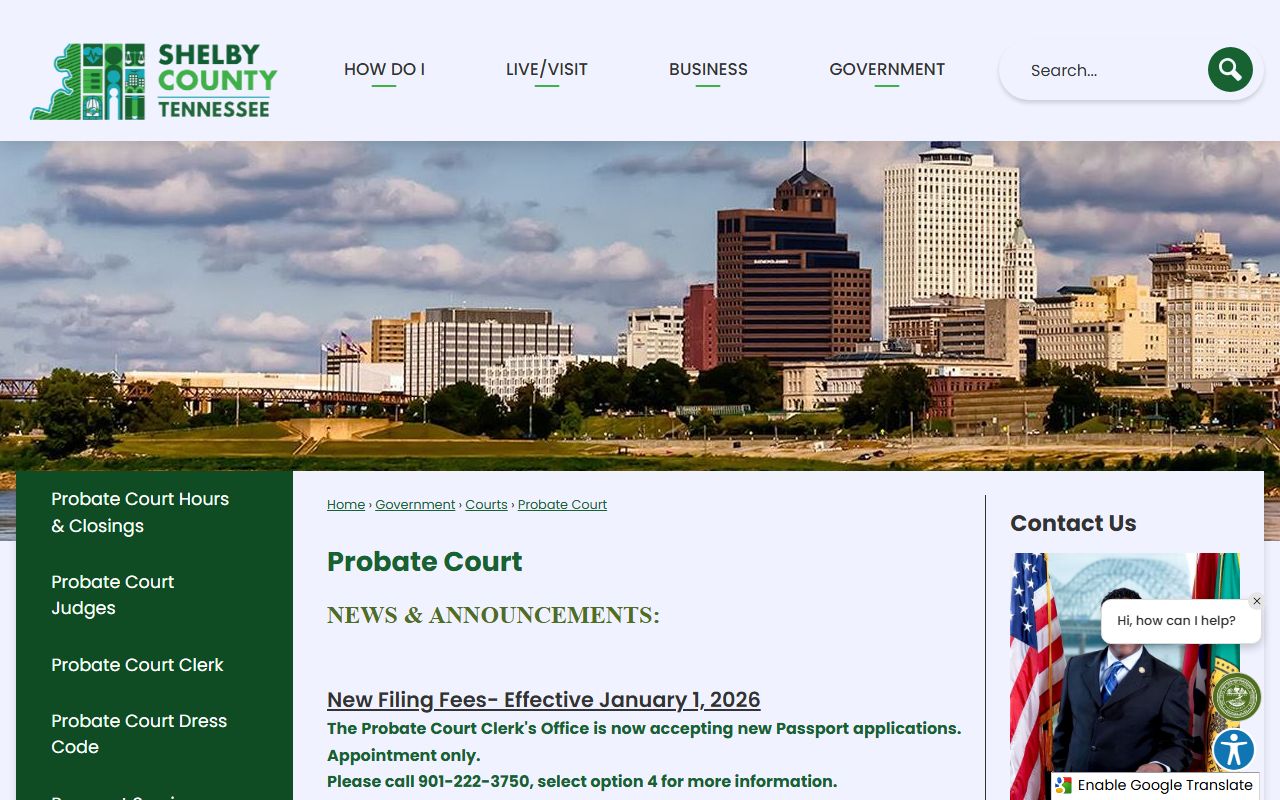
The Probate Court page is the official starting point for estate, guardianship, and conservatorship questions in Shelby County.
Each matter type has its own forms and steps. An estate moves through filing, notice, inventory, and final settlement. A guardianship or conservatorship requires proof that a person needs help and ongoing reports to the court.
Probate sits apart from the county's other courts for a reason. It is not a division of Circuit Court in Shelby County. The county maintains a separate Probate Court and Probate Court Clerk. So an estate or guardianship file will not turn up in a Circuit or Chancery search. Always start a probate matter with the Probate Court Clerk, not the general court records desk.
Probate Court and Clerk Contact
The Probate Court and Clerk's Office sit at 140 Adams Avenue, Room 124, in downtown Memphis. The Probate Court Clerk is Eddie S. Jones, Jr. The office is open weekdays and handles filings, copy orders, and case questions. It also accepts new passport applications by appointment.
Shelby County Probate Court Clerk
140 Adams Avenue, Room 124
Memphis, TN 38103
(901) 222-3750
Fax (901) 222-3756
Mon-Fri 8:00 a.m.-4:30 p.m.
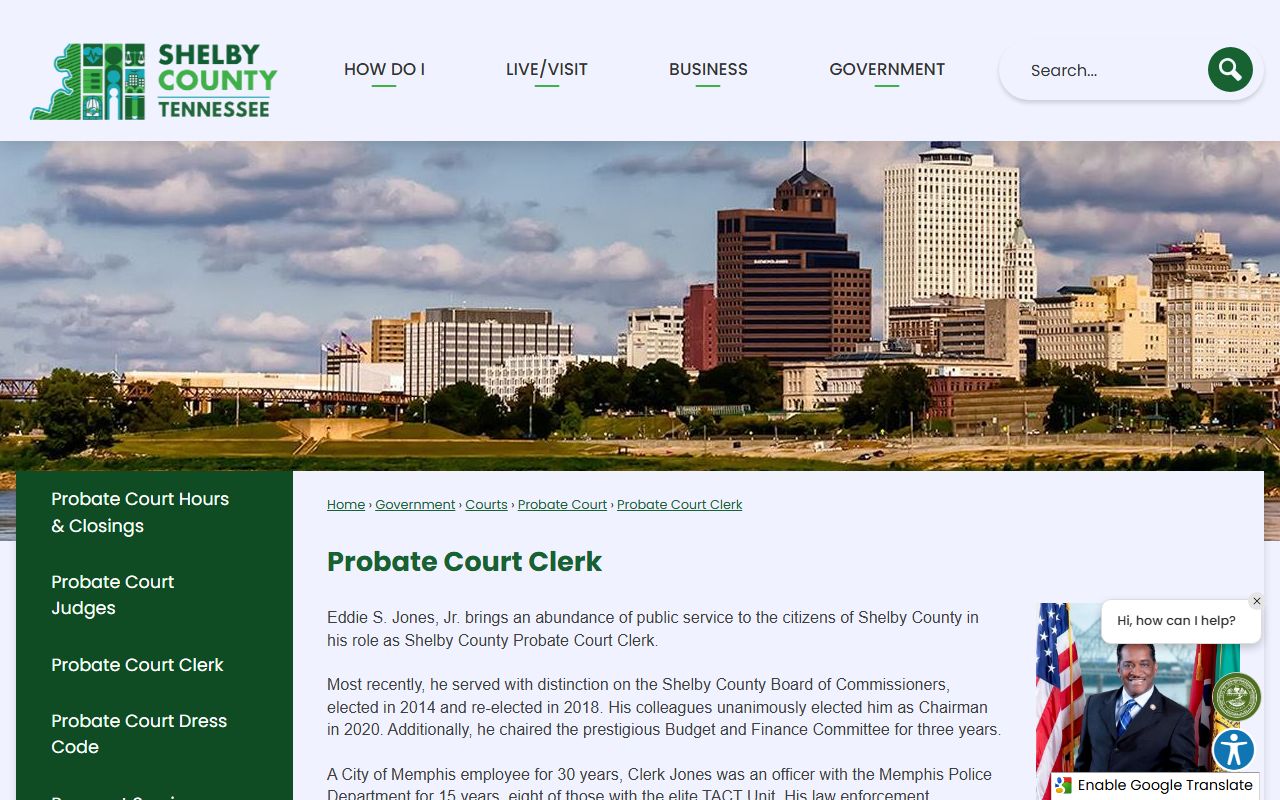
The Probate Court Clerk page introduces the clerk and the office that manages probate filings and copies. For passport help, call the office and select option 4.
How to Search Probate Records and Order Copies
There is no public online probate search form for Shelby County in the official sources. So most probate searches and copy orders go straight through the Probate Court Clerk. You can email the office a copy order, and printed black and white copies cost $0.50 per page. Have the case name, the decedent or ward's name, and an approximate date ready to speed the search.
For a certified or large copy order, call ahead to confirm the cost and the format. The clerk can tell you whether a file is open to the public or limited by law. Note: judicial hospitalization and some guardianship records hold medical detail and may be restricted.
A few facts make a probate search go faster. The decedent or ward's full legal name is the key identifier. An approximate filing year helps the clerk narrow the search. If you have a case number, share it. Estate files are often indexed by the name of the person who died, while guardianship and conservatorship files use the name of the protected person. When you request copies, say whether you need plain copies or certified copies, since certified copies carry a different charge and are the ones courts and banks usually accept.
Shelby County Probate Filing Fees
Probate filings carry set fees, and a new schedule took effect January 1, 2026. Some filings show no fee, while accountings, claims, motions, petitions, and notices have their own charges. The table below lists common amounts from the official cost schedule.
| Filing / Document | Fee |
|---|---|
| Accounting (interim/annual) | $75.00 |
| Final accounting/settlement | $75.00 |
| Status report | $7.00 |
| Orders | $20.00 (except certain appointing/closing orders) |
| Orders to continue | $30.00 |
| Petition | $25.00 |
| Motion | $25.00 |
| Claim | $50.00 |
| Exception to claim | $100.00 |
| Notice of insolvency | $200.00 |
| Printed black/white copies | $0.50 per page |
Confirm the current fee with the clerk before you file, since the schedule changed at the start of 2026.
Estates and Wills in Shelby County
When a person dies, their estate may go through probate. The court reviews any will, appoints a personal representative, and oversees the payment of debts and the transfer of property. A typical estate file holds a petition, an oath, an inventory, claims, accountings, and a final settlement. Creditors, beneficiaries, and TennCare may all receive notice during the case.
A will names a testator and usually an executor. If there is no will, the person died intestate, and state law decides who inherits. The court still supervises the process. The terms below come up often in estate files.
- Testator
- The person who makes a will.
- Executor
- The person named in a will to carry it out.
- Intestate
- Dying without a valid will.
- Guardianship
- Court authority over a minor or that person's affairs.
- Conservatorship
- Court authority over an adult who needs help managing affairs.
Guardianship and Conservatorship
Probate Court also protects people who cannot fully care for themselves. A guardianship covers a minor, while a conservatorship covers an adult who needs help with health, money, or daily affairs. The court appoints a guardian or conservator only after it reviews the proof and finds the person needs that support. These cases do not end at appointment. The guardian or conservator must file inventories, status reports, and accountings so the court can track the person's care and assets.
Because these matters touch a person's rights, the court watches them closely. Interested family members and other parties can receive notice and may take part in hearings.
The difference between the two terms matters when you read a file. A guardian is named for a minor. A conservator is named for an adult who can no longer manage health or money on their own. Both must act in the protected person's best interest, and both answer to the Probate Court. If a guardian or conservator fails to file required reports, the court can step in. That is why these cases stay open and active long after the first order.
Name Changes and Birth-Certificate Corrections
Probate Court handles more than death and disability. It also hears name change petitions and corrections to birth certificates. A name change asks the court to approve a new legal name, and the order then lets a person update other records. A birth-certificate correction fixes an error on an existing record. Both run through the same Probate Court Clerk's office at 140 Adams Avenue, Room 124.
These cases are usually shorter than an estate, but they still follow court rules. You file a petition, pay the fee from the current schedule, and attend a hearing if the court sets one. Bring proof of identity and any document that supports the request. The clerk can confirm which form to use, though staff cannot tell you what to write.
Do name changes show up in public records? A granted name change is a court order, and most are public unless a judge limits access for safety. Some matters tied to a minor or a protective situation can be handled with more privacy. If you are unsure, ask the Probate Court Clerk before you file.
Judicial Hospitalization and Record Restrictions
Not every probate file is fully open. Probate Court handles judicial hospitalization under the Tennessee Mental Health Law, and those records often hold medical and behavioral-health detail. Such files should be treated as restricted unless the clerk confirms public access. Some guardianship and conservatorship content can also be limited because it includes health or financial information.
Note: Treat mental-health and judicial hospitalization records as confidential and confirm access with the Probate Court Clerk before relying on any online or third-party summary.
Step-by-Step Probate Process
Probate follows a clear path from filing to closing. The steps below outline how a Shelby County estate or protective matter moves through the court.
- Decide the matter type: estate, will, guardianship, conservatorship, name change, birth-certificate correction, or judicial hospitalization.
- File the opening petition or application with the Probate Court Clerk at 140 Adams, Room 124, with any bond, oath, or notice papers.
- Pay the filing fee from the current cost schedule.
- Serve and notify interested parties, beneficiaries, creditors, TennCare, and any guardian or conservator as required.
- Attend the hearing if one is set and submit proposed orders to the clerk.
- For estates and protective cases, file inventories, accountings, status reports, and the final settlement or closing documents.
A lawyer is not always required, but probate rules are strict. The clerk can point you to the right form, though staff cannot give legal advice.